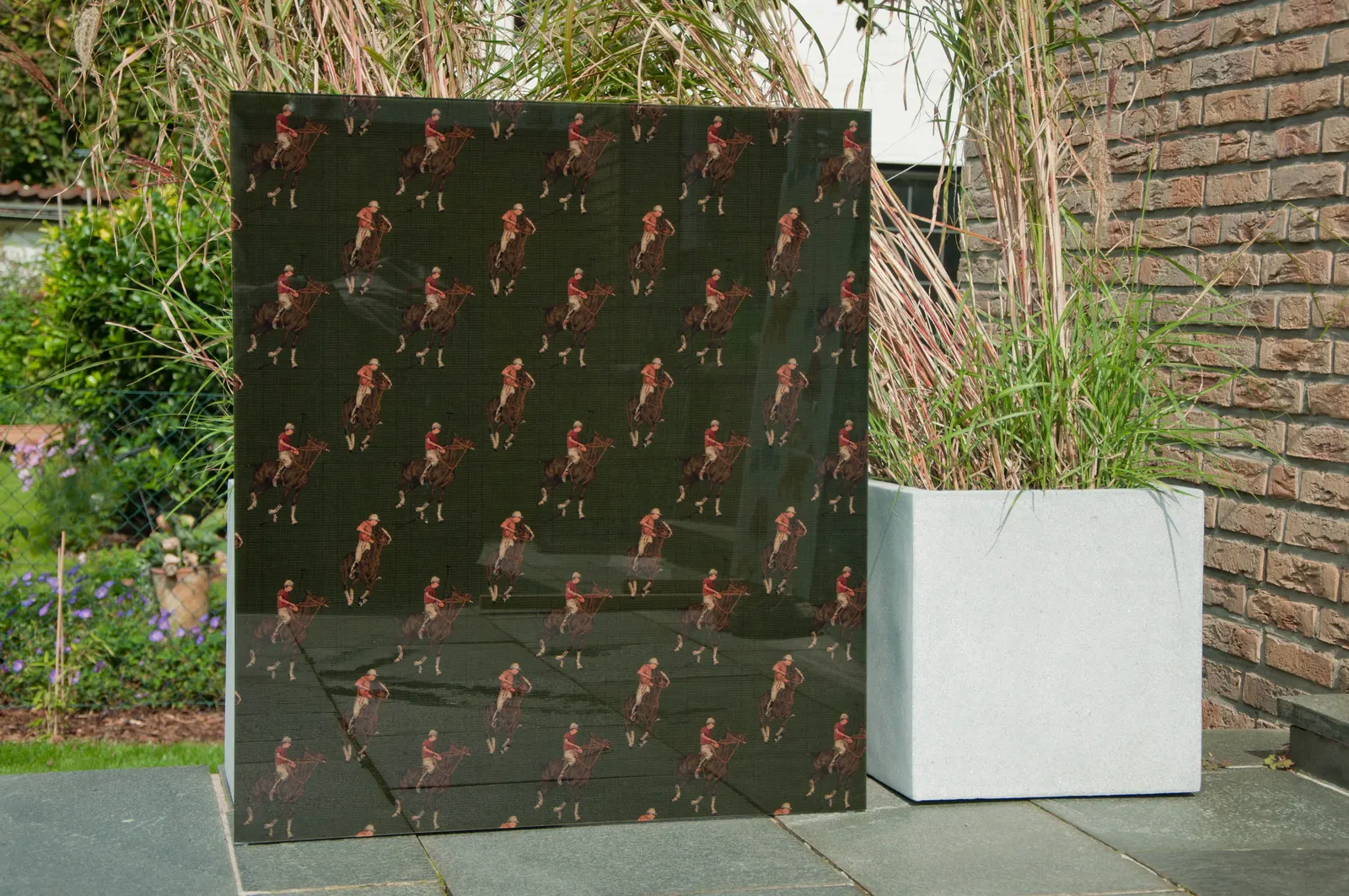
Laminated glass with metal and wire mesh places a metal or wire mesh permanently inside the laminate. The mesh is laminated between two glass panes and thus becomes part of the pane: protected, permanent and shaping the design. The result is a glass surface with a metallic look and noticeable depth which, depending on the mesh, filters views and keeps out part of the sunlight — without the metal gathering dust, corroding or being damaged.
For architects and façade planners, laminated glass with metal and wire mesh is a versatile design material that combines the safety of laminated glass with the character of metal. The surface looks technical and refined at the same time and changes its appearance with the viewing angle and incidence of light.
What makes laminated glass with metal mesh special
At its core, laminated glass with metal and wire mesh is a laminated safety glass with a metallic insert. During lamination, the mesh is permanently joined between the panes together with the interlayer. The result is a smooth glass surface in which the metal mesh appears to float. Unlike textile inserts, here the structure of the metal — mesh size, wire gauge, surface — determines the effect. Design and safety function come from a single component. The product belongs to the group of laminated and decorative glass (German only) and is closely related to laminated glass with fabric with textile inserts.
The build-up
The build-up follows the principle of laminated glass: two or more glass panes with the interlayer and the metal mesh as an insert in between. Depending on the requirement, float glass, heat-strengthened glass or toughened safety glass is used. Through the type of glass, interlayer thickness and mesh, the product can be matched to the desired look, light effect and level of safety. With three-dimensional or coarser meshes, the interlayer build-up and pressing parameters must be chosen carefully so that the laminate remains fully bonded and free of bubbles.
Types of mesh and their effect
The range of metal inserts is wide and has a decisive influence on the effect:
| Insert | Effect |
|---|---|
| Fine stainless steel mesh | Translucent, technical, even |
| Coarse wire mesh | Striking, three-dimensional, see-through |
| Brass & bronze mesh | Warm, high-quality, coloured |
| Expanded metal & perforated sheet | Structured, direction-dependent |
Each mesh creates its own look and light effect — from a subtle metallic structure to a three-dimensional design element. Coated or colour-finished meshes extend the possibilities further.
Privacy and solar control
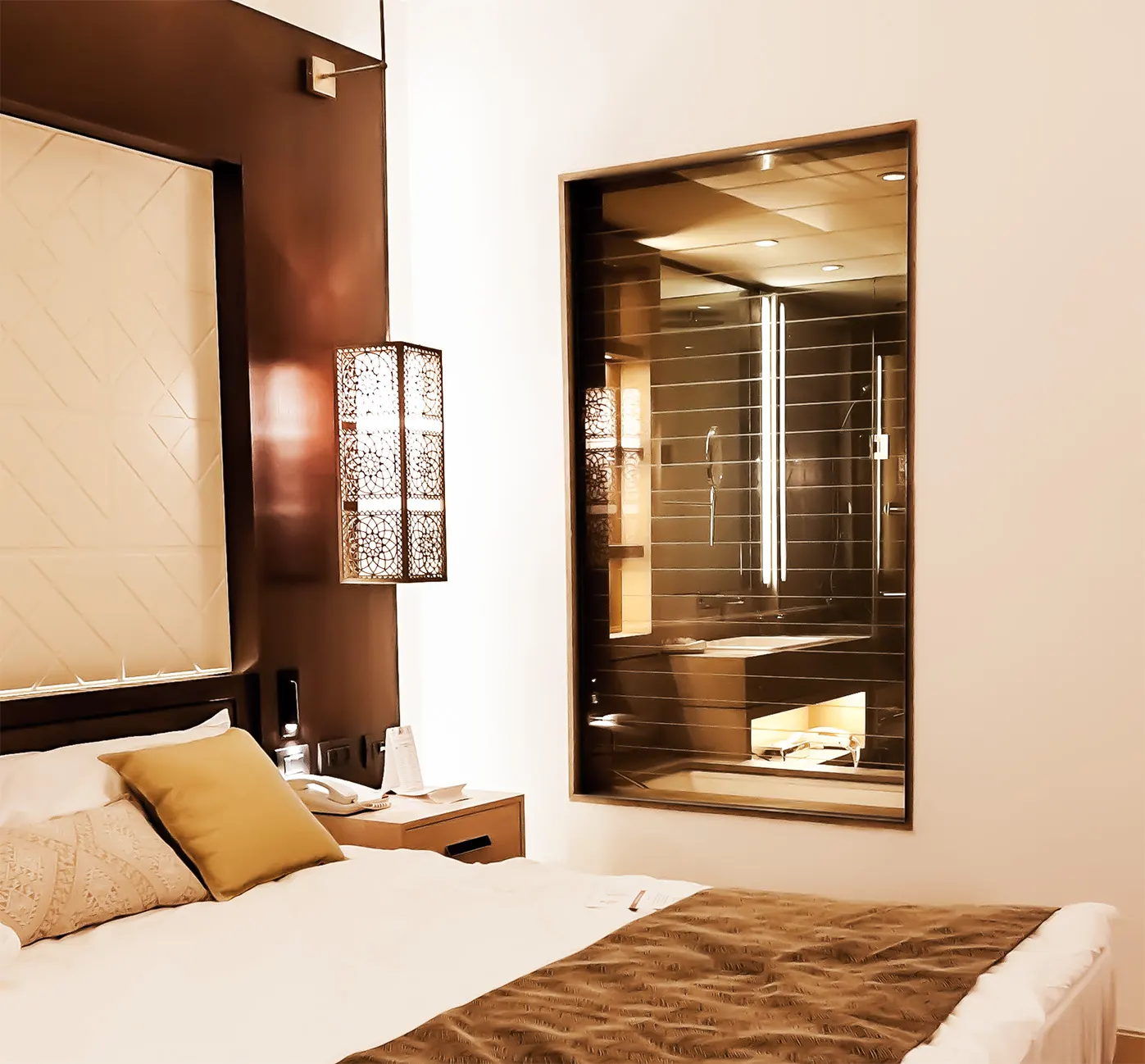
The protective effect of the glass depends directly on the mesh. Dense, finely woven meshes filter views and reduce the incidence of light more strongly; open meshes allow more transparency. A characteristic feature is the dependence on direction: from a shallow viewing angle the surface appears denser, from the front more transparent. This creates privacy that does not darken the room, as well as partial solar control. However, the glass does not replace solar control designed according to building physics — where specific g values or a defined energy input are required, the build-up must be verified specifically or combined with a solar control coating.
Depth and play of light
The special character of laminated glass with metal mesh comes from light. Depending on its surface and the incidence of light, the metal reflects differently, so the surface looks lively and changes over the course of the day. When backlit, the mesh structure stands out clearly. The position of the mesh inside the laminate also creates a spatial depth that a printed film cannot achieve — the structure lies visibly inside the glass, not on the surface.
Safety through laminated glass
The mesh is laminated in the build-up. If the build-up is classified as laminated safety glass (pendulum impact test to EN 12600), it retains fragments and holds together when broken. For barrier protection this is not automatically enough: the verifications of DIN 18008 assume sufficient adhesion and toughness of the interlayer in the broken state, which has to be verified separately with an insert. If the glazing cannot be assessed via a national test certificate (abP), it needs a general or project-related construction technique permit (aBG or vBG). This means that a design choice does not have to come at the expense of safety.
Applications
Laminated glass with metal and wire mesh can be used indoors and outdoors:
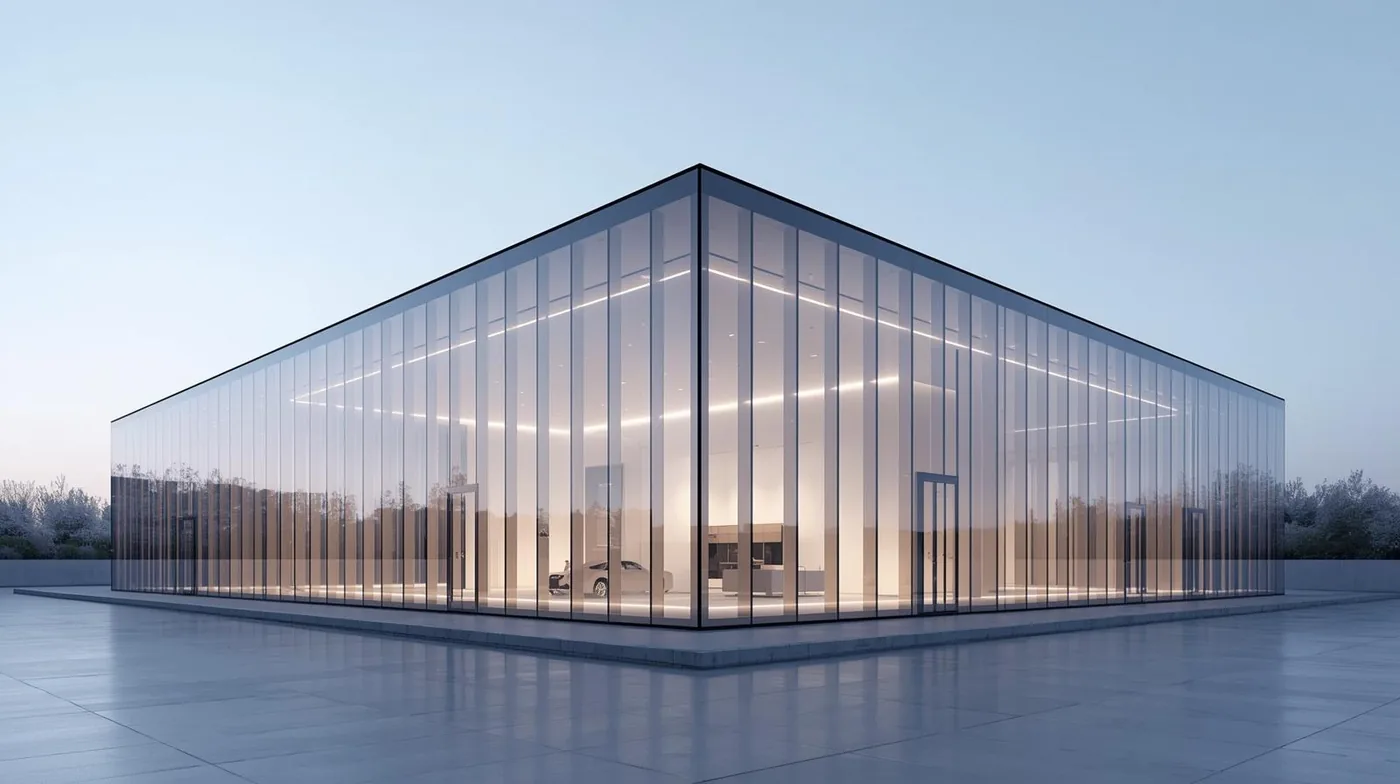
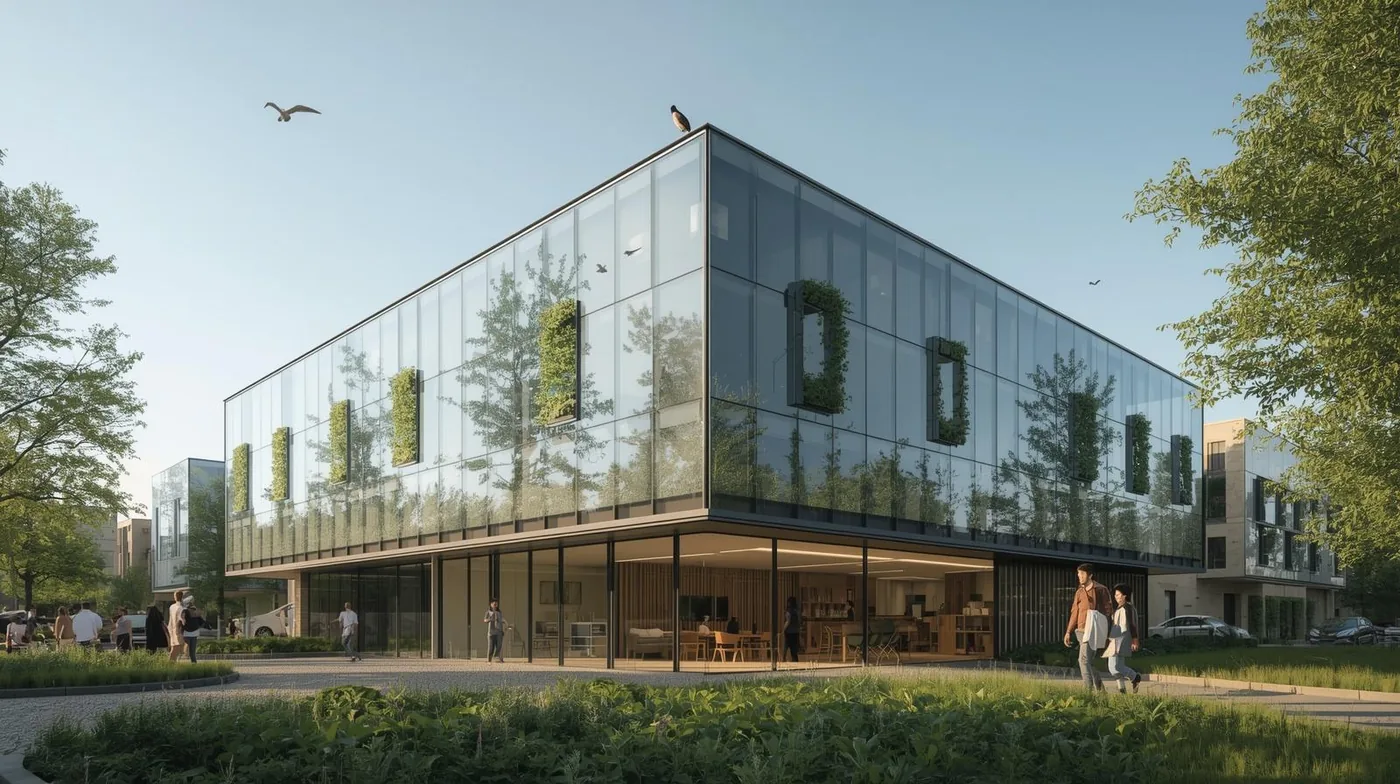
- Façade and spandrel elements: protected metallic look outdoors.
- Glass partitions and room dividers: filtering privacy with a material effect.
- Ceiling and wall cladding: large-scale design with a play of light.
- Balustrades and barrier protection: visible structure with the properties of laminated safety glass.
- Reception and brand presentation: prestigious surfaces with a technical character.
For outdoor use, material compatibility, corrosion protection and a permanently protected edge of the laminate must be planned with particular care.
Laminated glass with metal mesh compared with films
Compared with printed films or films with a metallic look, metal mesh in glass has clear advantages: the material is real, three-dimensional and reflects like metal, not like a printed image. It lies permanently and protected inside the glass instead of being stuck onto the surface, and it does not age. While films can fade or come loose over time, the mesh remains stable inside the laminate. For high-quality, durable designs, laminated glass with metal mesh is therefore the more robust solution — with correspondingly higher material and production effort.
Care and service life
Because the mesh lies protected inside the laminate, the visible surface is a smooth glass surface that is cleaned like ordinary glass. The metal is shielded from dust, moisture, UV and touch and keeps its appearance over the years. A prerequisite is an intact, protected edge of the laminate that prevents moisture from penetrating — crucial especially with metal inserts, which could corrode on contact with moisture. The result is a durable, low-maintenance component.
Typical design errors
- Mesh chosen without reference to the light and viewing situation, so the effect is lost.
- Solar control expected from the mesh without the necessary verification.
- Safety requirement overlooked, although barrier protection is required.
- Edge of the laminate insufficiently protected outdoors, which encourages corrosion and moisture damage.
Choosing the right mesh
The selection starts with the desired effect: fine and even, striking and three-dimensional, or warm and coloured? The mesh follows from this. Then the light and viewing situation — transmitted light, incident light or backlighting — determines mesh size and density. Finally, the installation situation, whether indoors or outdoors and with which safety requirement, determines the build-up. Early sampling in the planned format and under the later lighting conditions prevents surprises.
Our role
We assess laminated glass with metal and wire mesh neutrally, advise on the choice of mesh, on the privacy and solar control effect and on the safety build-up, and check whether the desired build-up meets the building regulation and technical requirements. We then put you in touch with the right manufacturer or fabricator — independent of manufacturers and documented. We do not sell glass; we bring design, light and technology together so that the finished surface looks exactly as planned.