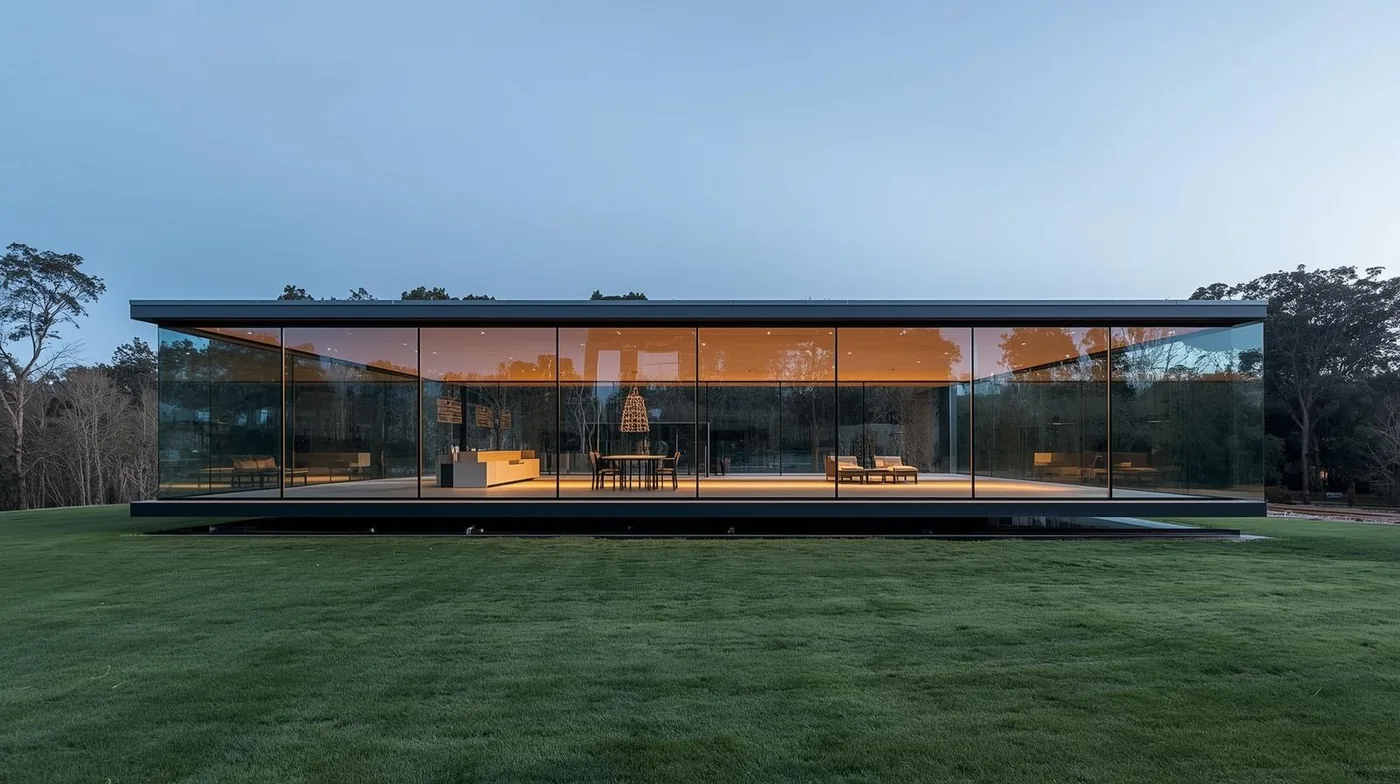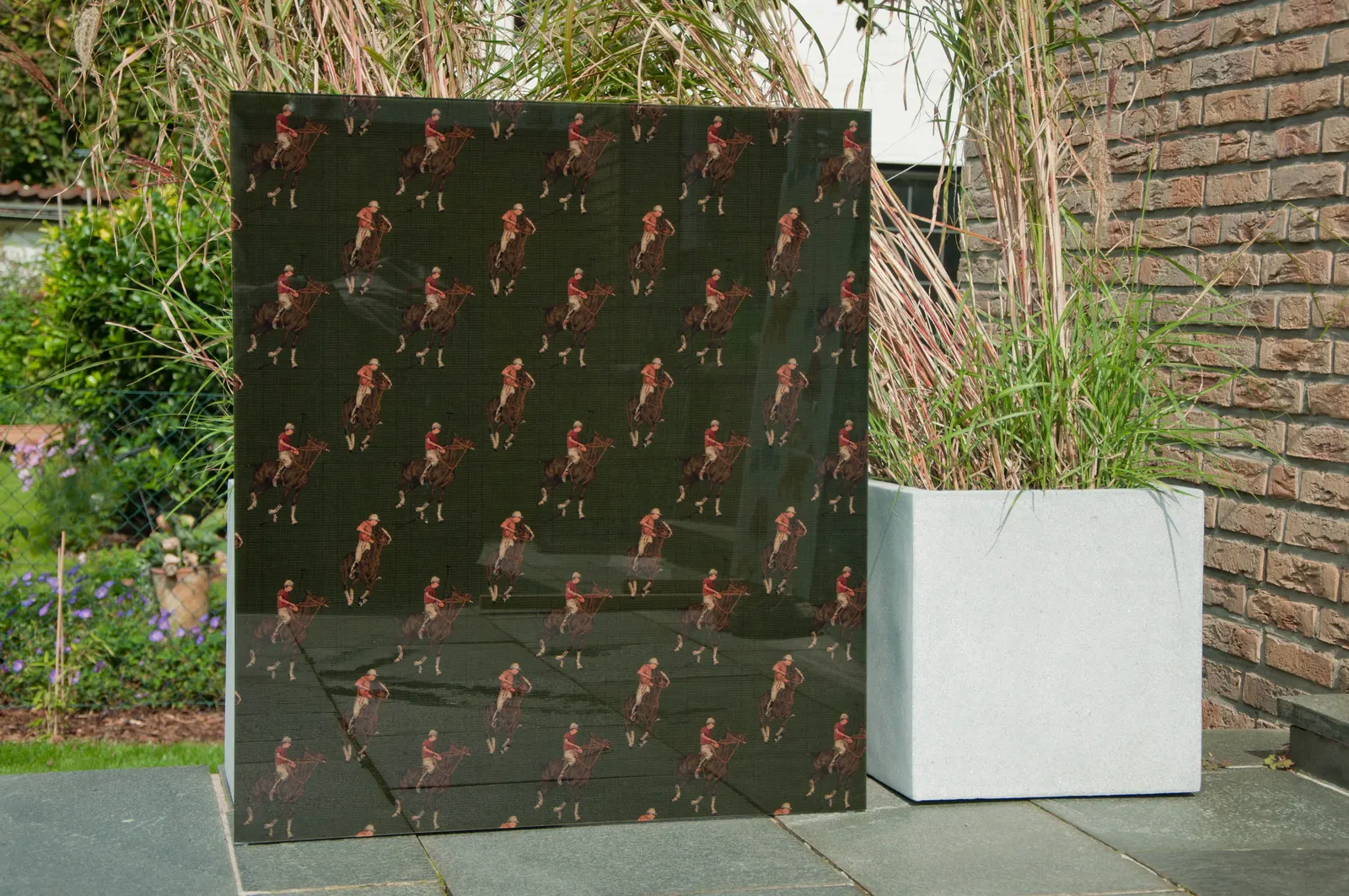
Textile laminated glass turns glass into a carrier of material and texture. A textile insert — a woven material, a fabric, a non-woven or a metal mesh — is permanently laminated between two glass panes. The material becomes part of the pane: protected, translucent and design-led at the same time. The result is a glass surface that provides privacy, diffuses daylight and gives rooms character.
For architects and interior designers, textile laminated glass is a versatile design material: it combines the safety of laminated glass with the warmth and feel of textile surfaces — without the material ageing, gathering dust or being damaged, because it lies safely inside the glass.
What makes textile laminated glass special
At its core, textile laminated glass is a laminated safety glass with a decorative insert. During lamination, the textile or mesh is permanently joined between the panes together with the interlayer. The result is a single, smooth glass surface in which the material appears to float. Design and technology merge — the pane is safety glass and a design element at the same time.
The build-up
The build-up follows the principle of laminated glass: two (or more) glass panes with the interlayer and the textile insert in between. Depending on the requirement, float glass, heat-strengthened glass or toughened safety glass is used. Through the type of glass, interlayer thickness and insert, the product can be matched precisely to the desired look, light effect and level of safety.
Range of materials
The range of inserts is wide and has a decisive influence on the effect:
| Insert | Effect |
|---|---|
| Textiles & fabrics | Warm, homely, opaque |
| Metal & wire mesh | Technical, refined, translucent |
| Non-wovens | Soft, light-diffusing |
| Natural materials | Organic, individual |
Each material creates its own lighting mood and feel — from a subtle structure to a striking design element.
Light and translucency
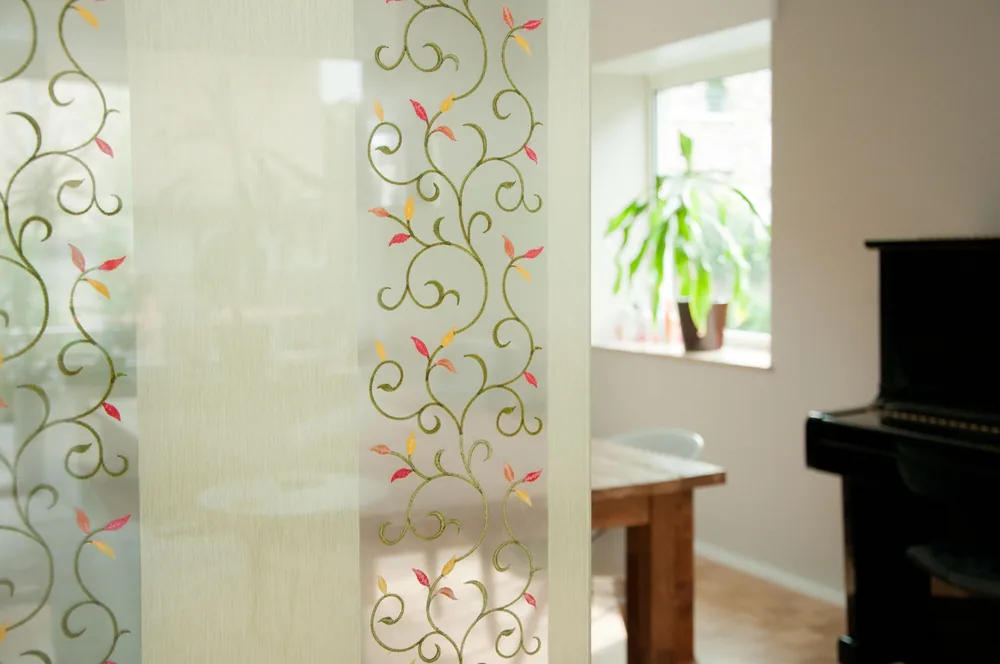
The special effect of textile laminated glass comes from light. Open weaves let daylight through and create fine plays of shadow; dense fabrics diffuse the light and look opaque. When backlit, the surface becomes a soft light source. The appearance thus changes with the incidence of light over the course of the day — the pane looks lively, not static.
Privacy with character
Unlike a simple matt finish, textile laminated glass offers privacy with character. The surface hides views but lets brightness and outlines through, and at the same time brings texture and materiality into the room. This makes it ideal for areas that need discretion but should not feel closed off — meeting rooms, receptions, practices. While a satin-finished pane looks neutral and technical, the textile insert gives the surface depth and warmth. A purely protective function thus becomes added design value that enhances the room instead of merely dividing it.
Safety through laminated glass
The insert is laminated in the build-up. If the build-up is classified as laminated safety glass (pendulum impact test to EN 12600), it retains fragments and holds together when broken. For barrier protection this is not automatically enough: the verifications of DIN 18008 assume sufficient adhesion and toughness of the interlayer in the broken state, which has to be verified separately with an insert. If the glazing cannot be assessed via a national test certificate (abP), it needs a general or project-related construction technique permit (aBG or vBG).
Applications
Textile laminated glass is versatile:
- Glass partitions and room dividers: privacy with a material effect.
- Doors and furniture fronts: refined, tactile surfaces.
- Ceiling and wall cladding: large-scale design with light.
- Façade and spandrel elements: protected material look outdoors.
- Reception and brand presentation: prestigious, individual surfaces.
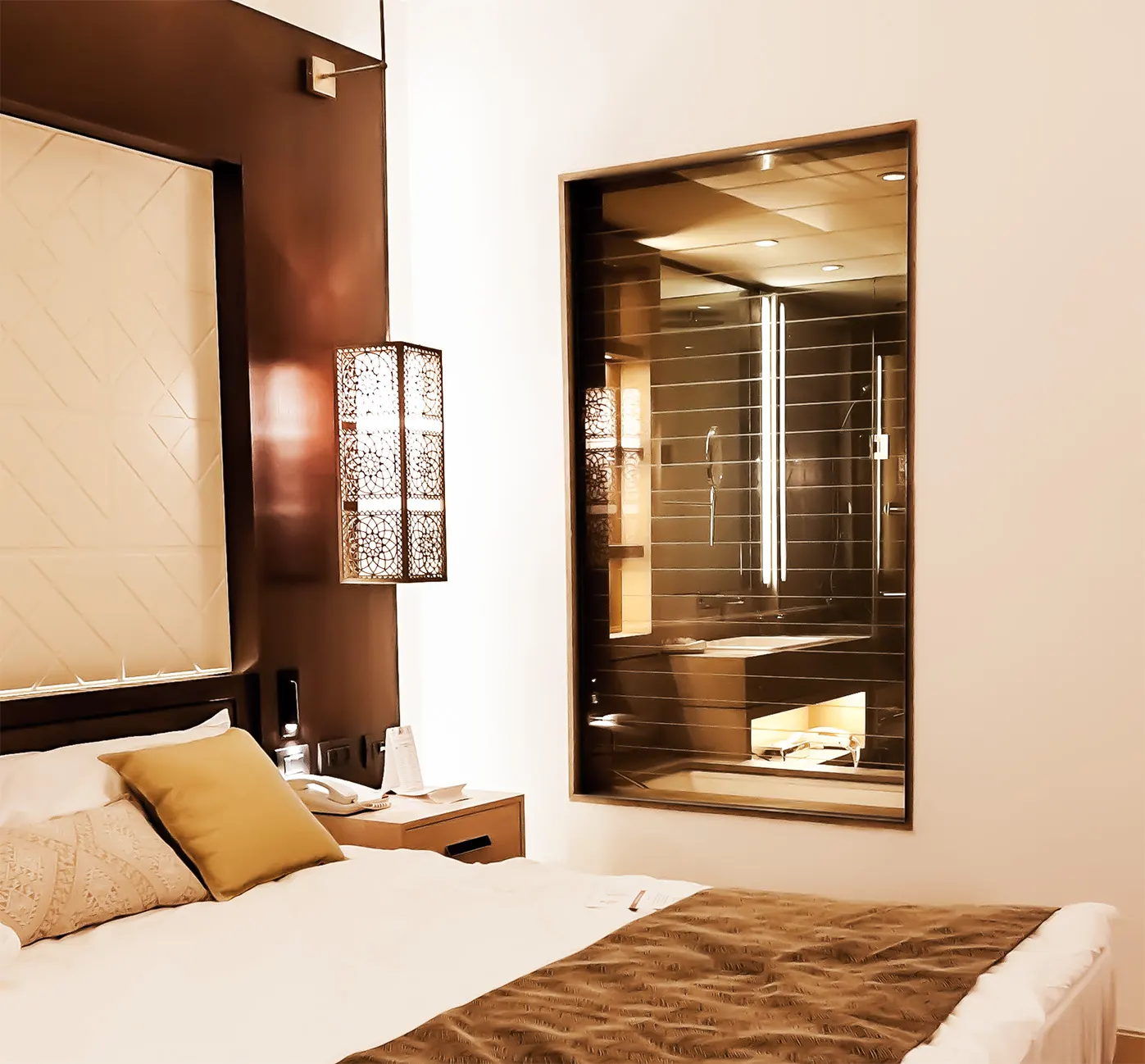
- Hotels and restaurants: atmospheric, durable room dividers with material character.
Design and brand impact
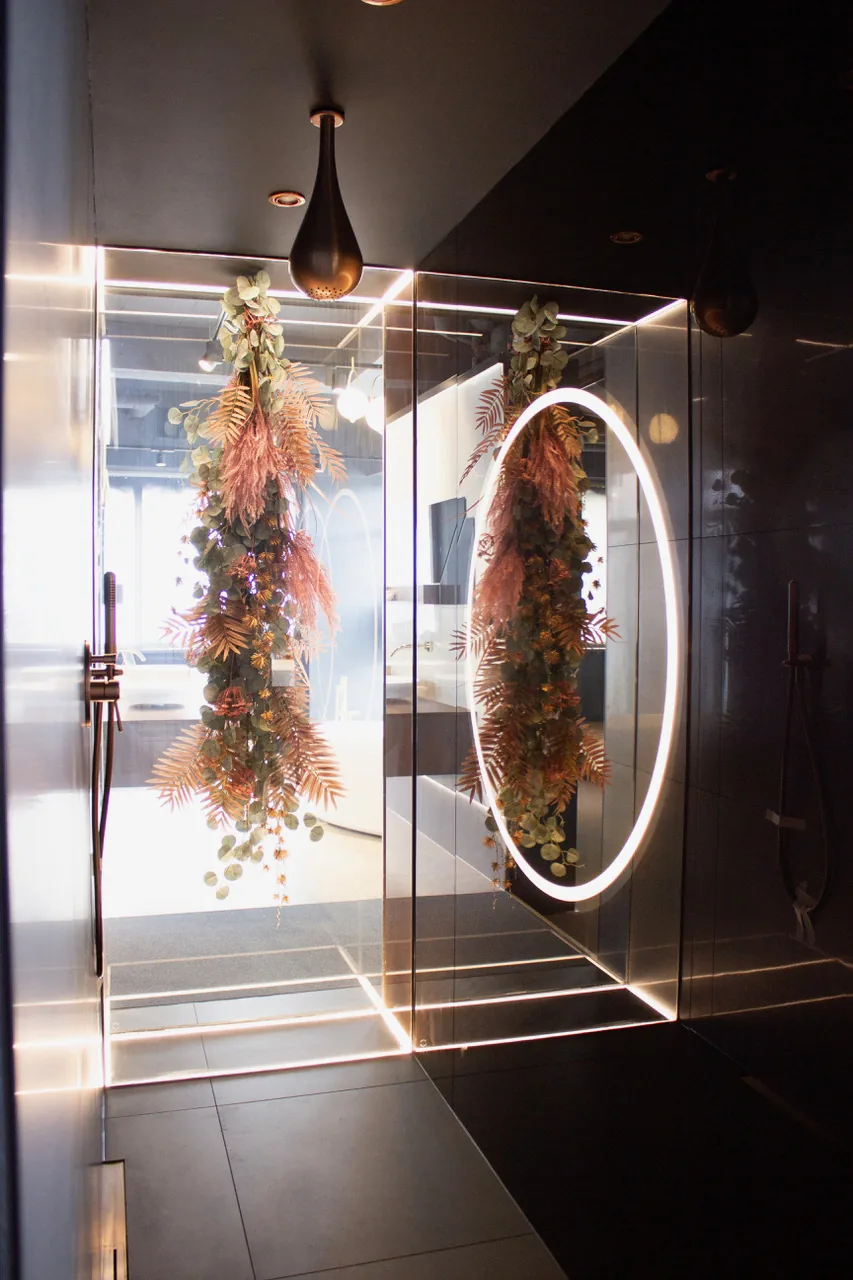
Textile laminated glass is particularly suitable for giving rooms their own signature. A company’s own fabric, a particular colour or a characteristic material becomes a recurring design element in the glass — in the reception, meeting rooms and façade. This creates a consistent appearance that conveys quality and identity without seeming contrived.
From design to finished glass
The path to finished textile laminated glass begins with the choice of material. The right insert is chosen from samples — according to look, light transmission and technical suitability. The material is then cut, positioned precisely and laminated with the glass panes and the interlayer. Because every insert reacts differently to light and lamination, experience is needed. Early sampling — ideally in the planned format and under the later lighting conditions — prevents surprises and ensures that the result meets expectations.
Textile laminated glass compared with films
Compared with printed or decorative films, textile laminated glass has clear advantages: the material is real, three-dimensional and can be experienced by touch, not just a printed image. It lies permanently and protected inside the glass instead of being stuck onto the surface, and it does not age. While films can fade or come loose over time, the insert remains stable inside the laminate. For high-quality, durable designs, textile laminated glass is therefore the more robust and more refined solution.
Technology and fire behaviour
When choosing the material, its technical behaviour matters as well as its look. In certain applications — for example in escape routes and occupied areas — requirements for the fire behaviour of the materials must be observed. Not every insert is approved for every situation. We check whether the desired insert and the glass build-up meet the relevant building regulation and technical requirements, and adapt the solution accordingly.
Acoustics and room effect
Textile inserts can make the room effect more pleasant. While glass itself reflects harshly, textile surfaces visually convey warmth and a sense of security. Combined with genuine acoustic measures, textile laminated glass thus contributes to a balanced atmosphere — soft in design, technically safe.
Care and service life
Because the insert lies protected inside the laminate, the visible surface is a smooth glass surface that is cleaned like ordinary glass. The material is shielded from dust, moisture, UV and touch and keeps its appearance over the years. A prerequisite is an intact, protected edge of the laminate that prevents moisture from penetrating — a durable, low-maintenance product. Unlike exposed textiles, which gather dust, yellow or wear, the insert inside the glass stays fresh permanently. This also makes textile laminated glass interesting for busy areas in which open textile surfaces would quickly become unsightly — a key advantage over conventional fabric coverings or acoustic curtains.
Costs and cost-effectiveness
Textile laminated glass is of higher quality and more expensive than standard glass, because material, lamination and individual design involve considerable effort. The price depends on the insert, format and safety build-up. It becomes cost-effective as a design highlight that combines several functions — privacy, safety, design — in one component and gives rooms a prestigious character that is hard to achieve with other materials.
Individual special solutions
A particular strength of textile laminated glass is customisation. Through the free choice of insert, project-specific solutions can be realised that exist nowhere else — a specially developed fabric, a material with a special history or a colour combination that matches the interior concept exactly. Especially in prestigious projects — company headquarters, hotels, museums — the glass surface thus becomes an unmistakable design feature. This freedom distinguishes textile laminated glass from standardised decorative glass and makes it a tool of sophisticated interior design. We provide support from the idea through sampling to technical implementation.
Typical design errors
- Insert chosen without reference to the lighting situation, so the effect is lost.
- Safety requirement overlooked, although barrier protection is required.
- Edge of the laminate not sufficiently protected, which encourages moisture damage.
- Backlighting wanted but not technically prepared.
Choosing the right material
The selection starts with the desired effect: warm and homely, technical and refined, or striking and individual? The insert follows from this. Then the lighting situation — transmitted light, incident light or backlighting — determines the weave and density. Finally, the installation situation determines the safety build-up. We bring design, light and technology together so that the finished surface looks exactly as intended.
Our role
We advise on the choice of material, the light effect and the safety build-up, coordinate backlighting and installation situation and put you in touch with the right manufacturer — independent of manufacturers and documented. Because the effect depends heavily on the interplay of material, light and build-up, this early, neutral coordination is the key to a convincing result. This turns glass into a design surface that combines privacy, safety and character.