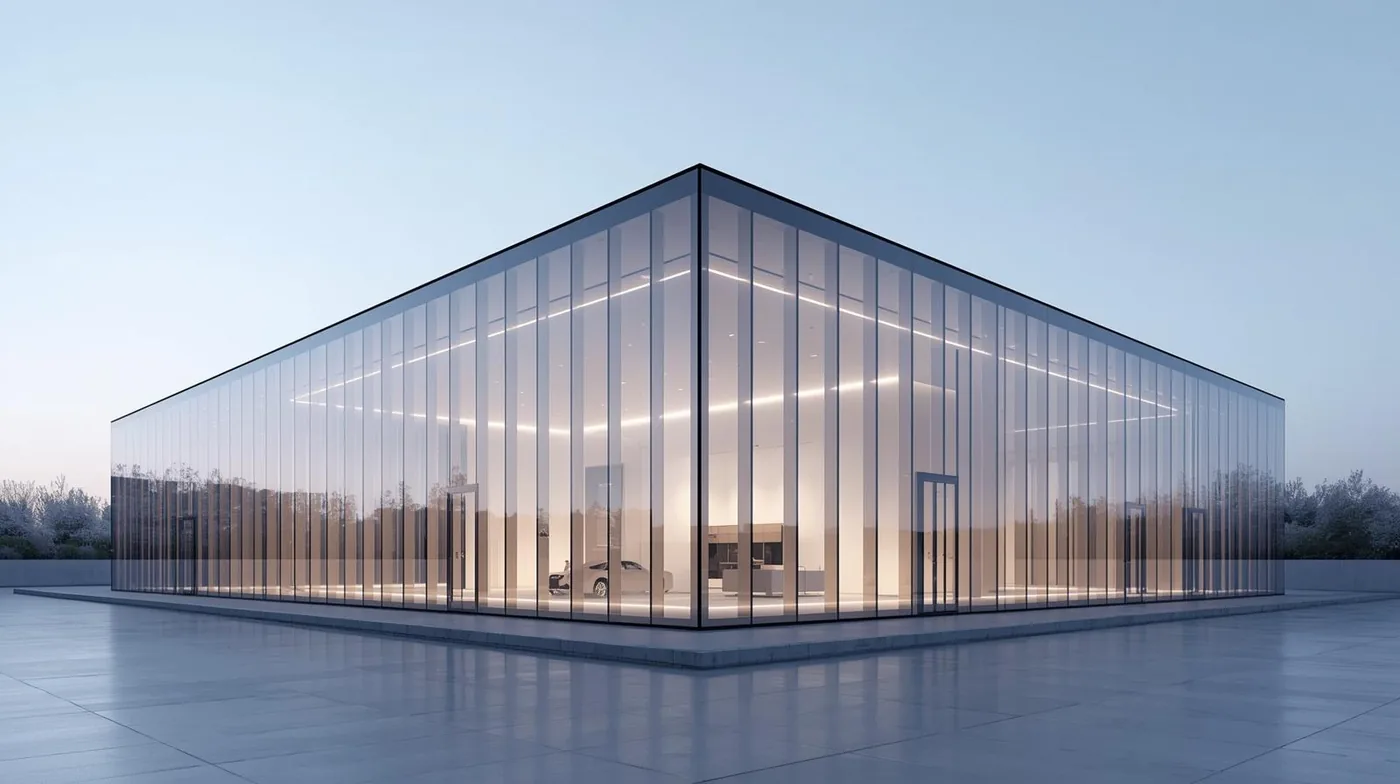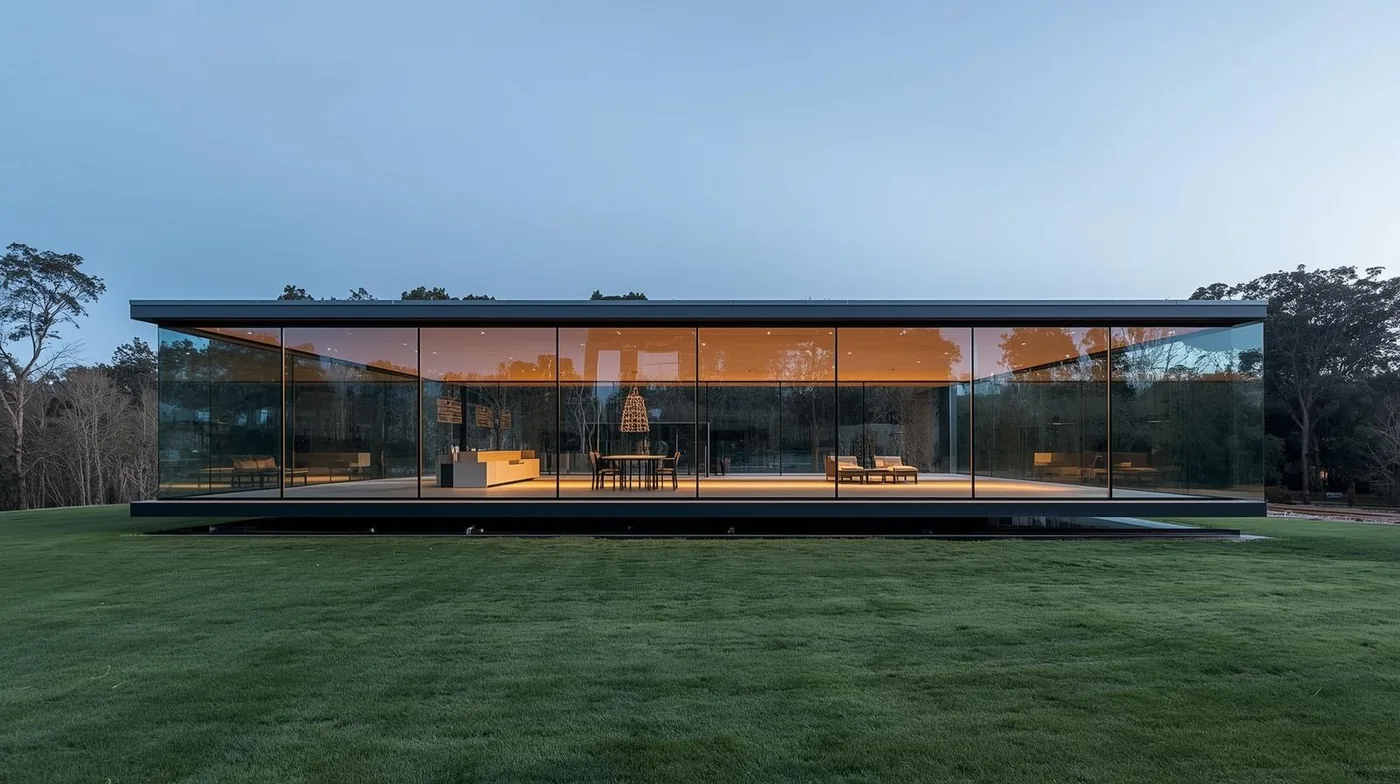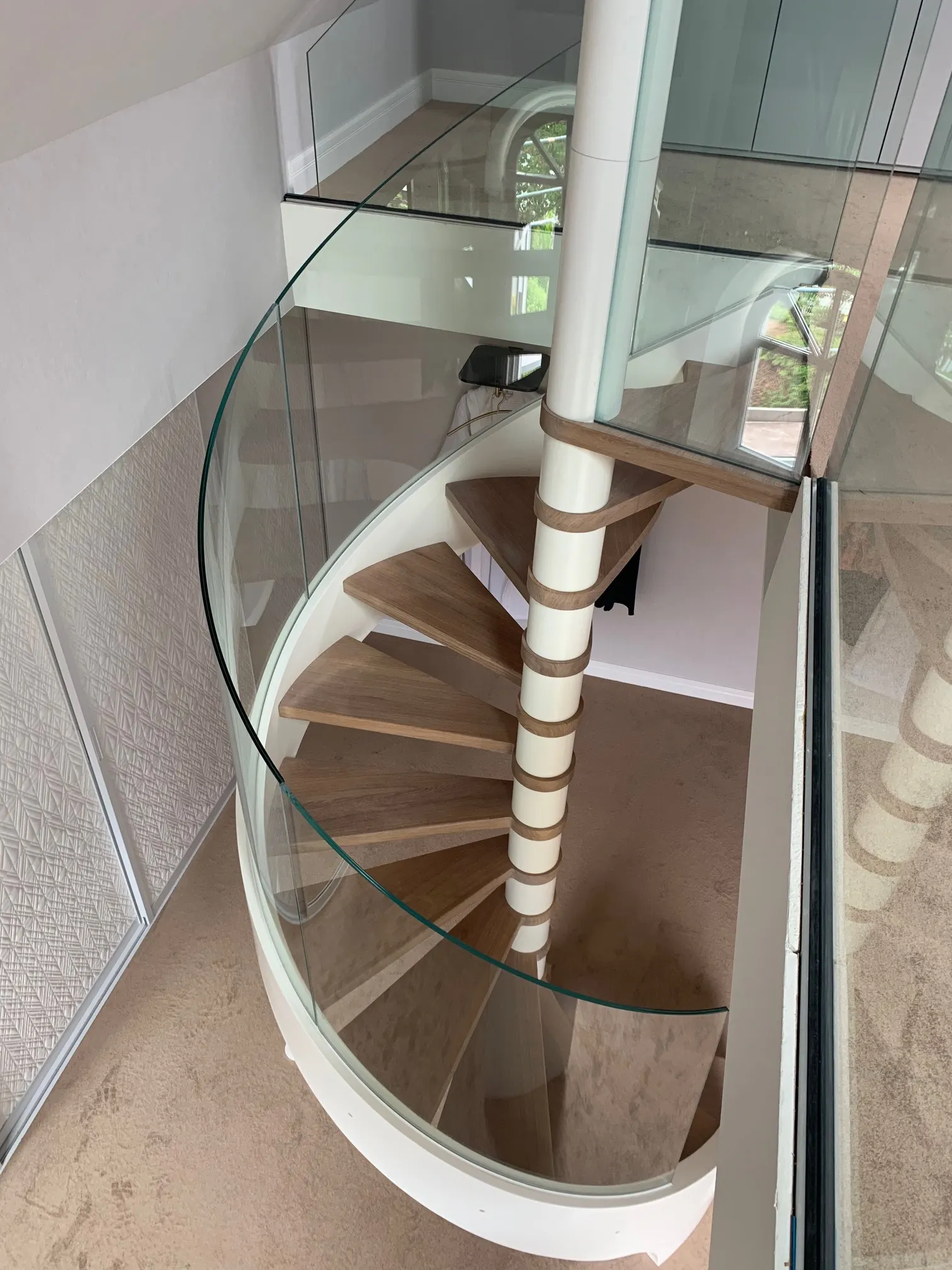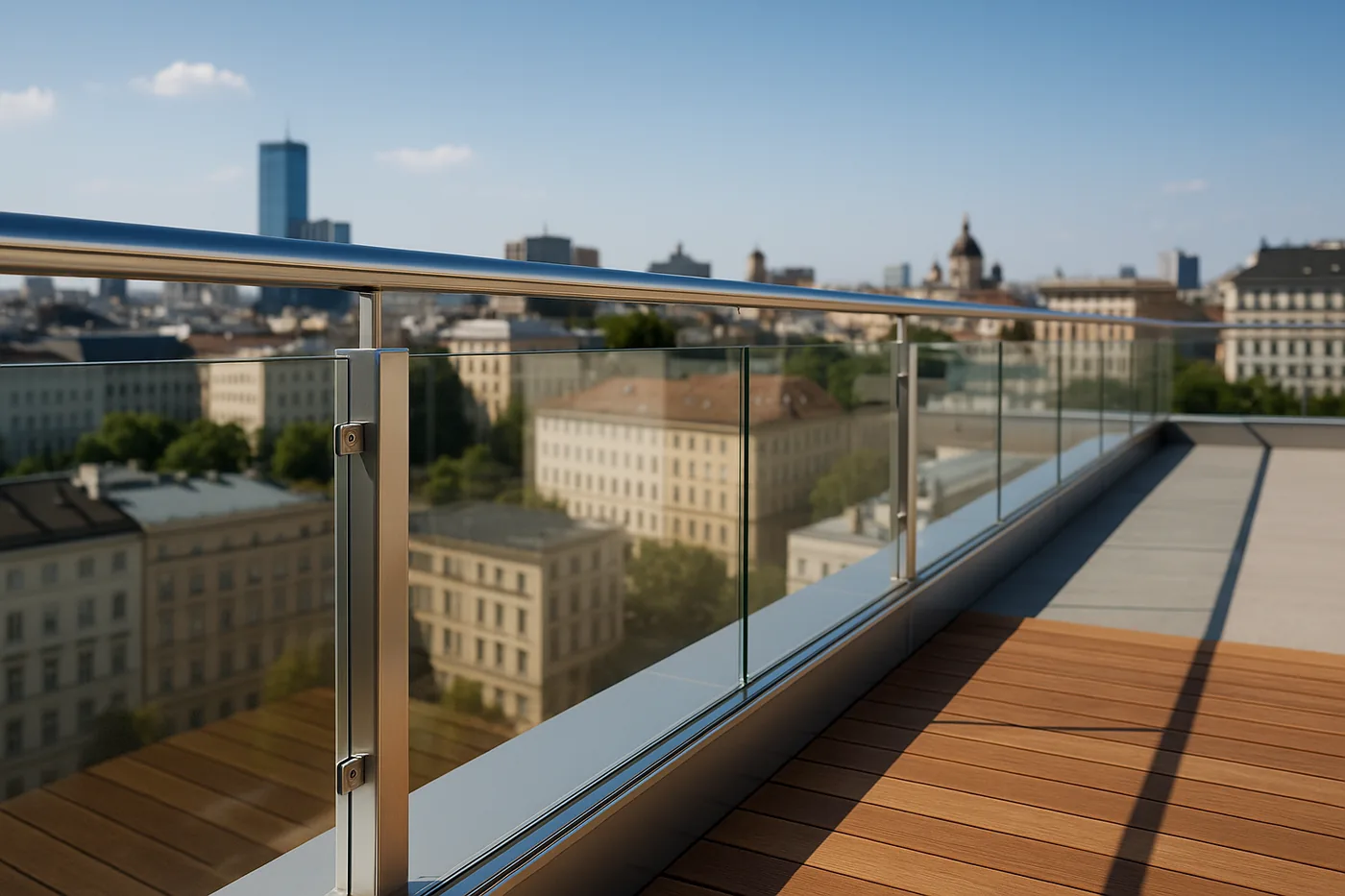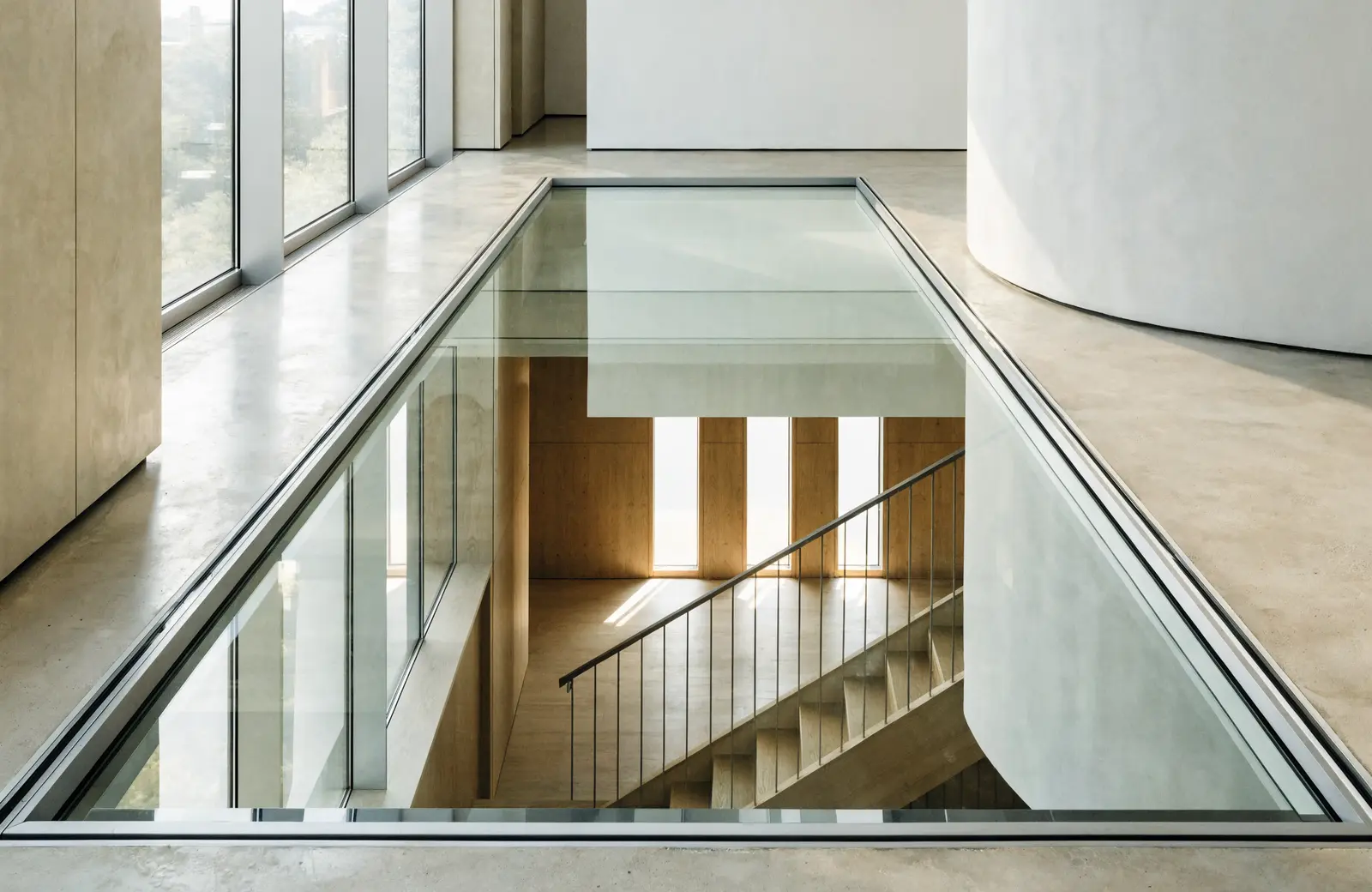
Bird-protection glass prevents birds from colliding with glass surfaces. Birds do not recognise clear or reflective glass as an obstacle: they see through it or fly towards the reflected image of sky and vegetation. Bird-protection glass therefore carries visible markings — dots, lines or grids — that make the glass visible to the birds without significantly spoiling the view for people.
For architects and planners, bird protection has turned from a mandatory exercise into a real design topic: more and more development plans, nature conservation requirements and sustainability certificates call for effective solutions on exposed glass surfaces — and the marking helps shape the appearance of the façade.
Why bird strikes are a serious problem
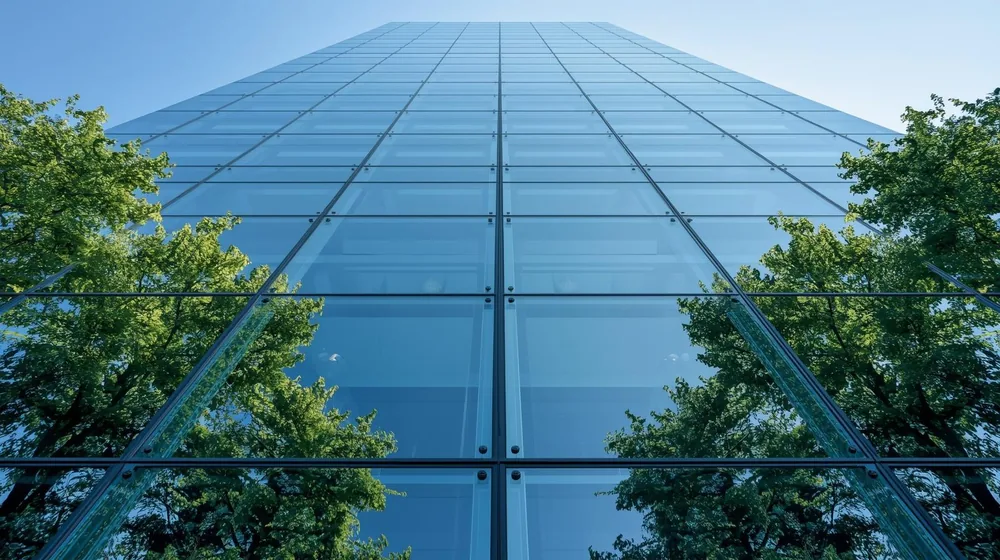
Glass is one of the most common human-made causes of death for birds. NABU estimates that in Germany alone, around 100 million birds die on glass panes every year — from collisions with façades, noise barriers, conservatories and link corridors. Large, transparent façades, reflective glass surfaces and glazed corners that suggest a clear flight path are particularly dangerous. Surfaces in front of trees, hedges or planted courtyards are also critical, because the vegetation is reflected in the glass.
With the trend towards ever more transparent buildings, the problem is growing — and with it the responsibility in design to think about bird-safe glass at an early stage.
How birds perceive glass
Birds see differently from people. They do not perceive transparency and reflection as a barrier and head straight for the supposedly open space. Two situations are particularly risky:
- See-through: in rooms glazed around a corner or with opposite windows, the bird sees open sky or plants on the other side.
- Reflection: reflective façades show sky and trees — the bird flies towards the reflection.
This is exactly where bird-protection glass comes in: it interrupts see-through and reflection with patterns that make the glass recognisable as a solid surface.
Principles and solutions
There are several proven ways of making glass visible to birds:
| Solution | Principle |
|---|---|
| Dot grid | Visible dots interrupt see-through and reflection |
| Line pattern | Vertical or horizontal stripes as a barrier |
| Screen/digital printing | Ceramic print, permanently fired in |
| Etching / frosting | Frosted structures in or on the glass |
| UV pattern | Invisible to people — but not highly effective in tests, specialist bodies advise against it |
According to current knowledge, visible markings are effective: dot and line patterns whose effect has been demonstrated in flight tunnel tests. UV patterns were long regarded as an elegant invisible alternative — this view is outdated. The Swiss Ornithological Institute now lists them among the ineffective measures, BUND advises against their use, and a test by the Vienna Environmental Ombudsman’s Office (2024) found 36 per cent of flights towards a UV stripe pattern — statistically measurable, but clearly below the high-effectiveness threshold of ONR 191040. Anyone faced with manufacturers’ claims about UV products should ask for the specific, independent test evidence.
Marking spacing and contrast
Two factors decide effectiveness: spacing and contrast. As a rule of thumb (“palm rule”), unmarked areas should not be larger than the palm of a hand. For line patterns this means specifically: vertical lines at most 10 cm apart, horizontal lines at most 5 cm apart. The closer the grid and the clearer the contrast with the surroundings, the more reliably birds avoid the glass.
The position of the marking is also important: it must be effective on the outside. If it is too far inside in an insulating glass unit, it is overlaid by the external reflection and loses effect.
Specific guide values from practice with proven, tested patterns:
| Feature | Guide value |
|---|---|
| Vertical lines | at least approx. 5 mm wide, max. 10 cm apart |
| Horizontal lines | at least approx. 3 mm wide, max. 5 cm apart |
| Unmarked area | no larger than the palm of a hand |
| Coverage | effective line patterns are usually below 5–6 % |
Highly effective patterns confirmed in flight tunnel tests therefore protect even with a small proportion of the surface — what matters is arrangement, contrast and position, not as much coverage as possible.
What does not work — common misconceptions
At least as important as the effective solutions is knowing what does not protect. Nature conservation organisations such as NABU have clearly refuted several popular “solutions”:
- Individual bird-of-prey silhouettes (“raptor stickers”): they cover far too little area. Birds merely avoid the sticker and fly into the glass next to it. The supposed deterrent effect does not exist.
- Isolated stickers far apart: where the unmarked area remains larger than the palm of a hand, birds fly through the “gap”.
- Markings only on the inside of reflective façades: the external reflection overlays them and the effect is lost.
- UV patterns: long advertised as an invisible solution, but according to current knowledge not reliably effective. The Swiss Ornithological Institute classifies UV markings as ineffective, BUND advises against their use — in the flight tunnel test they clearly miss the high-effectiveness threshold.
Only a full-surface, sufficiently dense marking on the outside is effective — everything else is cosmetic at best.
Effectiveness and evidence
The protective effect of patterns is determined in standardised tests — for example in flight tunnel experiments that measure how birds avoid the glass. The results are divided into categories that have become established as a reference:
| Category | Flights towards the test pane | Rating |
|---|---|---|
| A | below 10 % | highly effective — “bird-protection glass” |
| B | 10–20 % | conditionally suitable |
| C | over 20 % | not very effective |
Category A patterns therefore reduce the risk of collision by more than 90 per cent. The Swiss Ornithological Institute keeps a continuously updated list of tested markings with these ratings. Such evidence is the basis when authorities or certification systems require effective bird protection — a mere claim is not enough there.
Design and visual contact
Bird protection was long regarded as a design compromise. Modern solutions resolve this contradiction: fine dot grids look almost invisible from a distance, line patterns can be integrated into the façade design, and printed patterns can become a deliberate design element. The result is effective protection that respects architectural transparency.
Applications
Bird-protection glass makes sense wherever glass becomes a trap for birds:
- Glass façades and curtain walling: large transparent or reflective surfaces.
- Glass corners and transitions: where see-through suggests a clear flight path.
- Noise barriers and balustrades: often near vegetation and in open spaces.
- Link corridors and conservatories: transparent elements between buildings.
- Parapets and barrier glazing with a view through.

Standards and requirements
There is as yet no uniform nationwide legal obligation in Germany — however, an important legal anchor is the prohibition on killing and injuring wild animals under § 44 of the German Federal Nature Conservation Act (Bundesnaturschutzgesetz, BNatSchG), which can lead to conditions for glass surfaces at risk of bird strikes in the planning approval process. In practice, more and more development plans, nature conservation requirements and certification systems such as DGNB also call for effective bird protection on exposed surfaces.
Recognised test bases have become established for demonstrating effectiveness:
- ONR 191040 — Austrian test standard for the bird-protection effect of glass, also used as a reference in other German-speaking countries.
- Flight tunnel tests (e.g. according to the method of the Biological Station Hohenau-Ringelsdorf / Vienna Environmental Ombudsman’s Office) with effective products rated in category A (highly effective).
- BF Bulletin 025/2025 “Bird-friendly building with glass” (Vogelfreundliches Bauen mit Glas) of the German Flat Glass Association (Bundesverband Flachglas) (January 2025, developed with the VFF), with requirements and recommendations on assessment and execution. It makes clear that a product may only be marketed as bird-protection glass if its effectiveness has been tested for that specific product — a reference to tests of similar patterns is not enough.
What matters is that a product is proven effective by such tests — a mere claim is not enough for authorities and certifiers. We check which requirements apply to a specific project and which tested solution meets them.
Combination with other functions
Bird protection can be combined with solar control, thermal insulation, sound insulation and barrier protection, because the marking is on or in the glazing. In insulating glass units, the right position of the marking is essential so that it remains effective on the outside. The result is glazing that meets several requirements at once without weakening bird protection.
Costs and cost-effectiveness
The surcharge for bird protection depends on the solution. For factory screen-printed bird-protection glass, the surcharge compared with standard glass is roughly in the order of about €30 to €50 per square metre — standardised dot and line grids are comparatively inexpensive, individual print patterns and large-area etching cost more. Over the project as a whole, early installation is always more economical than retrofitting later — films applied afterwards are less durable and often less effective than a factory-marked pane.
Bird protection for private homes
Bird strikes are not only an issue for large glass façades. At private homes, too, floor-to-ceiling windows, bay windows glazed around a corner, conservatories and glass balcony parapets in front of gardens and hedges are critical. For private households there are solutions you can apply yourself: marking patterns applied on the outside, printed or etched panes when windows are replaced and special films that are effective over the full surface. Here, too, the outside and close spacing are important — individual stickers or bird-of-prey silhouettes are not enough. If you are ordering glass anyway for a new building or window replacement, factory-marked panes are the most reliable choice.
Typical design errors
- Bird protection considered only after the design, instead of identifying the critical surfaces early.
- Marking spacing too large — the protective effect does not materialise.
- Marking positioned too far inside in an insulating glass unit, so that the external reflection overlays it.
- Reliance on UV patterns, whose effectiveness specialist bodies now deny — instead of a tested visible pattern.
- Reflective surfaces in front of vegetation overlooked, which are particularly critical.
Choosing the right bird-protection glass
The right solution follows from the interaction of several factors. First, it must be clarified how critical a surface is at all: large, transparent or reflective panes, glass corners and surfaces in front of vegetation carry the highest risk and require the most effective markings. Small, subdivided or shaded windows are less dangerous.
Second, the required evidence decides: where authorities or certification systems require effective bird protection, patterns tested as category A in tunnel tests are mandatory — an untested in-house solution or a UV product without reliable evidence is not enough. Third, design must be weighed up: fine dot grids are barely noticeable from a distance, line patterns can be integrated into the façade design — the choice of tested visible patterns is now large enough that there is no need for a detour via ineffective “invisible” solutions. Fourth, the combination with other functions plays a role — solar control, thermal insulation or barrier protection affect the build-up and the position of the marking.
We weigh up these factors for each project and recommend the solution that balances protective effect, design and budget — instead of choosing the most expensive or the simplest pattern across the board.
Retrofitting existing buildings
Existing glass surfaces can also be made safer. Stick-on marking films and dot and stripe grids are available for retrofitting — here too: choose visible patterns, no UV stickers. Films are cheaper than replacing the glass but last less long and can come loose in the weather. For permanently critical surfaces, the factory-marked pane is the more reliable solution. The same rules apply to retrofitting as to new buildings: close marking spacing and sufficient contrast on the outside.
Care and cleaning
Bird-protection glass is cleaned like ordinary glazing. With fired-in screen or digital print patterns, the marking is permanent and resistant to cleaning and weather. Stuck-on retrofit solutions, on the other hand, should be checked regularly for adhesion and completeness, as missing markings cancel out the protective effect locally.
Bird protection and lighting concept
Bird protection is closely linked to daylight and reflection planning. Highly reflective solar control glass increases the risk of collision because it reflects sky and vegetation. A clever combination of lower reflection and effective marking reduces both at the same time. The arrangement of indoor planting, lit rooms and see-through corners also affects how dangerous a glass surface is for birds — aspects that belong in the design, not only in construction.
Our role
We identify the surfaces of a design that are critical for bird strikes, assess the applicable requirements and recommend the right, demonstrably effective solution — matched to design, other glass functions and budget. This turns bird protection from an afterthought into a natural part of responsible glass design.