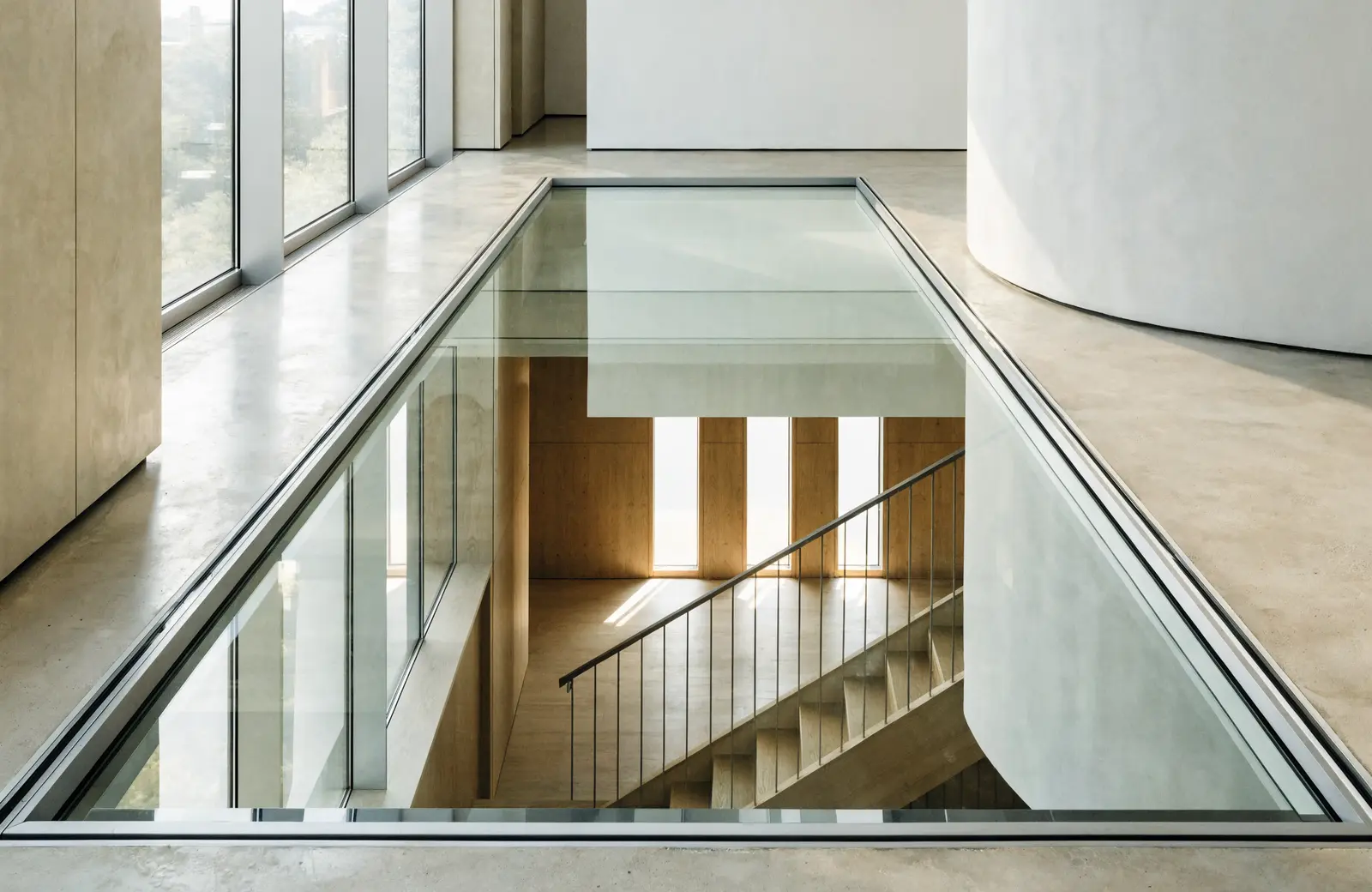
Laminated safety glass (German: Verbundsicherheitsglas, VSG) is the safety glass that holds together when it breaks. It consists of several glass panes permanently bonded by a tough, tear-resistant interlayer. If the glass breaks, the fragments stick to the interlayer: the pane does not fall apart but remains intact as a whole. This property makes laminated safety glass the basis of almost all safety-relevant glazing.
For architects and planners, laminated safety glass is one of the most important glass products of all: barrier protection, overhead glazing, walk-on glass, burglar resistance and sound insulation are all based on it. Which build-up is needed is governed by DIN 18008 — and depends heavily on the installation situation.
How laminated safety glass is built up
Laminated safety glass consists of at least two glass panes with one or more interlayers. The interlayer is permanently bonded to the glass under heat and pressure, creating an inseparable laminate. The glass used is float glass, heat-strengthened glass (TVG) or thermally toughened safety glass (ESG) — depending on the required strength and breakage behaviour.
The number and thickness of the panes and the type of interlayer allow laminated safety glass to be matched precisely to the requirement: from simple splinter protection to high-security, bullet-resistant glazing.
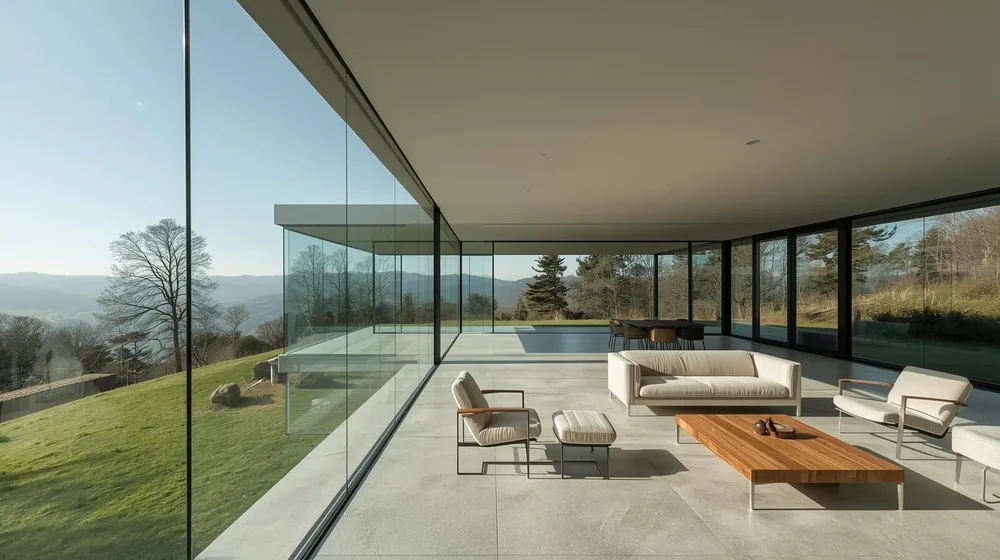
Fragment retention and post-breakage load-bearing capacity
Two properties make laminated safety glass so valuable:
- Fragment retention: if the glass breaks, the fragments stick to the interlayer. No falling splinters are created that could cause injuries or endanger people beneath the pane.
- Post-breakage load-bearing capacity: the broken laminate continues to carry loads. A barrier parapet therefore remains effective even if the glass is damaged.
It is precisely this post-breakage load-bearing capacity that distinguishes laminated safety glass from simple toughened glass and makes it indispensable for barrier and overhead glazing.
Laminated safety glass, toughened and heat-strengthened glass compared
The three types of safety glass are often confused:
| Type of glass | Breakage behaviour | Post-breakage load-bearing capacity |
|---|---|---|
| Toughened glass (ESG) | Breaks into blunt granules | none |
| Heat-strengthened glass (TVG) | Breaks into larger pieces | only when laminated |
| Laminated safety glass (VSG) | Holds together on the interlayer | yes |
Toughened glass protects against cuts but has no post-breakage load-bearing capacity. Heat-strengthened glass is almost always processed further into laminated safety glass, because when laminated it offers a particularly high post-breakage load-bearing capacity. Laminated safety glass is the only variant that remains intact as a surface when broken.
Safety functions of laminated safety glass
Through its build-up and choice of interlayer, laminated safety glass covers a wide range:
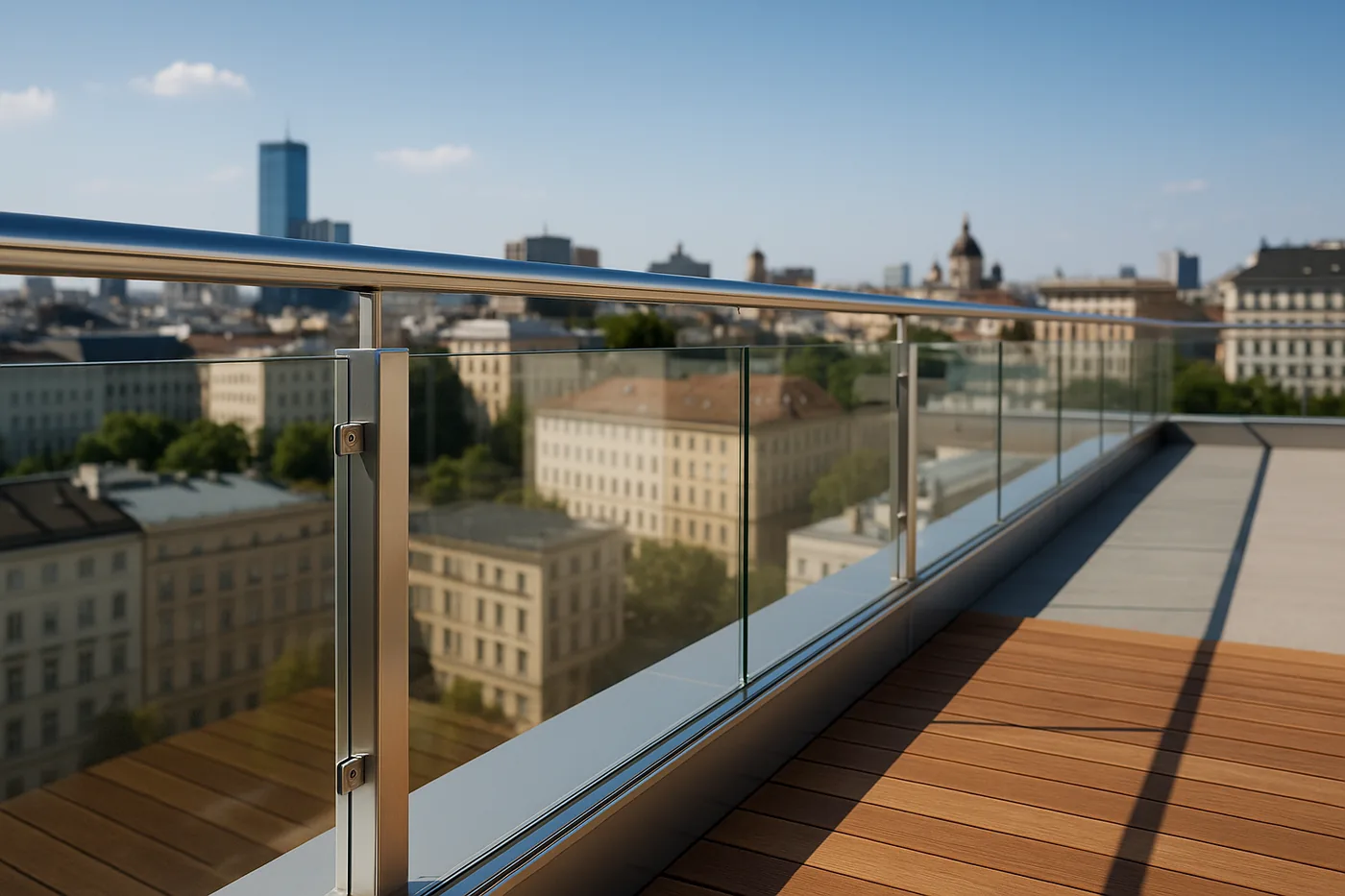
- Barrier protection: balustrades, parapets and floor-to-ceiling glazing to DIN 18008-4.
- Overhead safety: roof and overhead glazing from which no splinters may fall.
- Burglar resistance: glazing resistant against manual attack and bullet attack in standardised resistance classes.
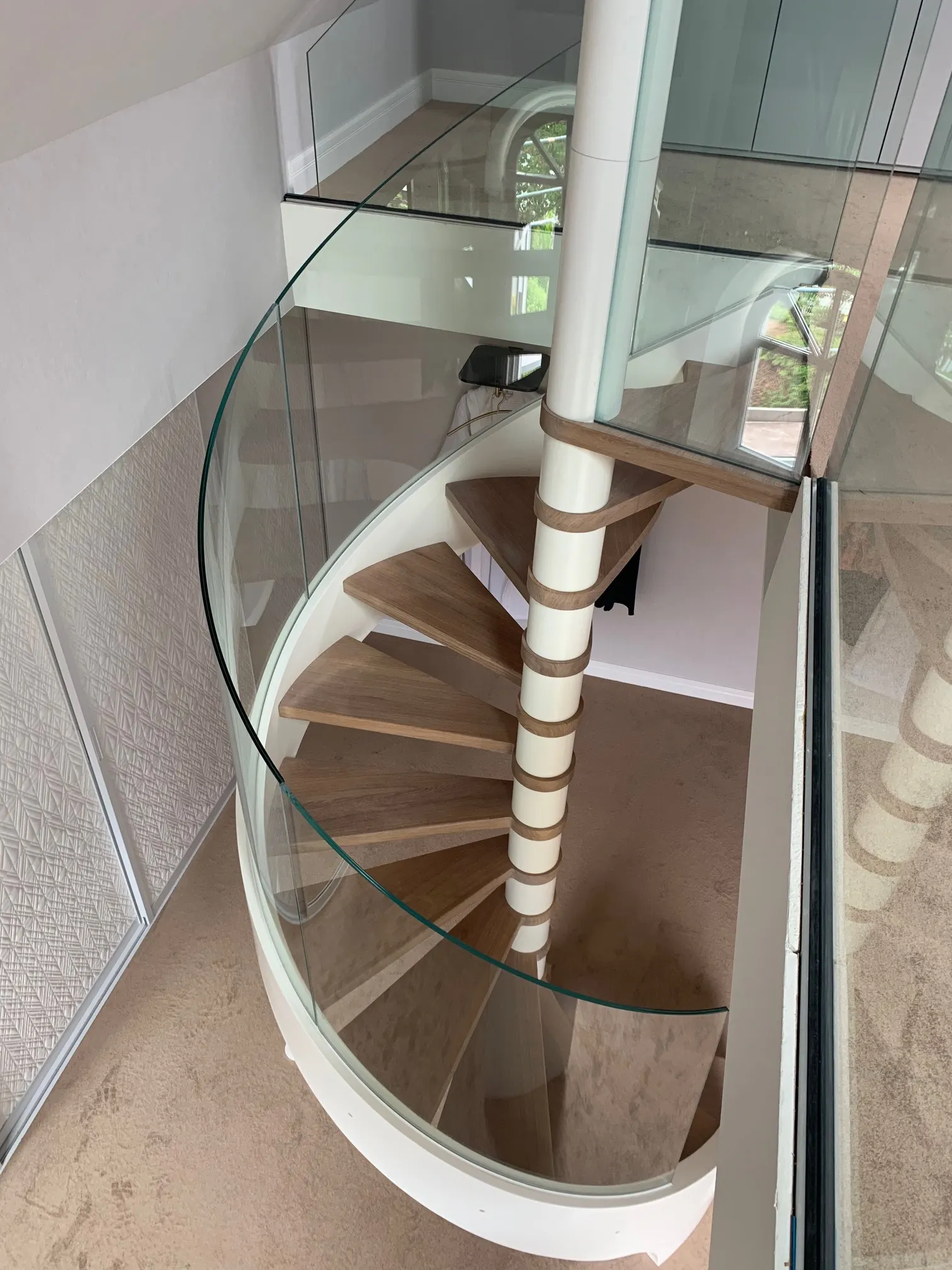
- Walk-on glass: glass floors and stair treads with post-breakage load-bearing capacity.
DIN 18008 and the installation situation
Whether laminated safety glass is needed, and which kind, follows from DIN 18008. It governs load-bearing and safety-relevant glazing and distinguishes by installation situation — for example barrier, overhead or walk-on. This classification determines the glass build-up, pane thickness and interlayer thickness. A general choice without reference to the installation situation leads to defects; design to the standard is mandatory.
Types of interlayer and their effect
The interlayer helps determine the properties:
- Standard PVB interlayer: the classic — retains fragments, tear-resistant, filters UV.
- Acoustic PVB: additionally sound-insulating, the basis of acoustic glass.
- Stiff ionoplast interlayer (e.g. SentryGlas): particularly strong and edge-stable, for high loads and slim build-ups.
The interlayer can also be used to create coloured, satin-finished or printed effects, so that laminated safety glass can take on design tasks at the same time.
Additional functions: sound, UV, design
Laminated safety glass can do much more than provide safety. Depending on the interlayer, it filters UV radiation and thus protects furniture, textiles and exhibits from fading — an important advantage in museums, shopfitting and living spaces. With an acoustic interlayer, laminated safety glass improves sound insulation, and coloured or printed interlayers turn it into a design element. The same pane thus often combines several functions.
Applications
Laminated safety glass is everywhere in modern buildings:
- Barrier glazing on balconies, stairs and galleries.
- Overhead and roof glazing, where splinter protection is mandatory.
- Shop windows and display cases with burglar protection and UV filter.
- Walk-on glass as a floor, tread or walkway.
- Glass balustrades and parapets with a view through.
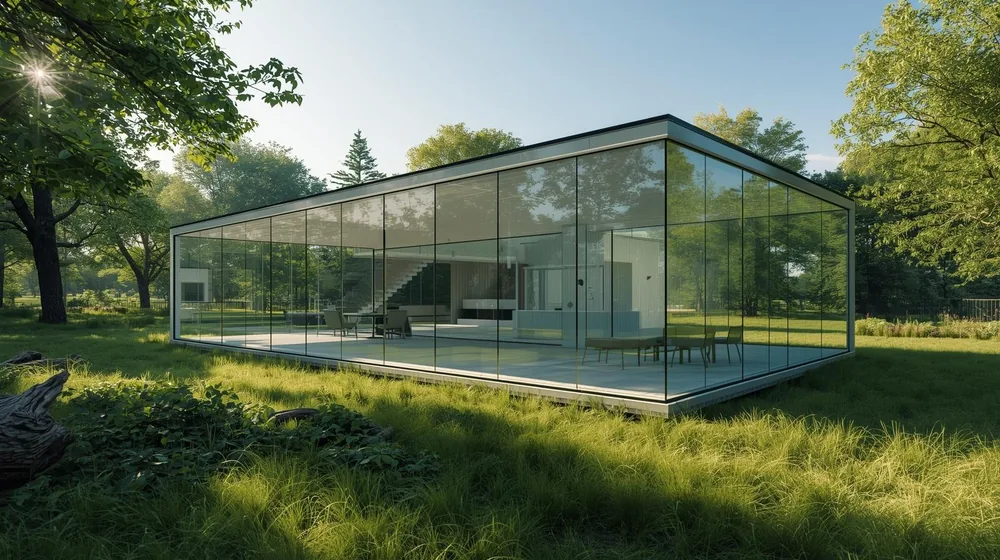
Walk-on and overhead glass
Two applications require particular care. Overhead glazing must retain fragments so that nothing falls down in the event of breakage — laminated safety glass is mandatory here. Walk-on glass such as glass floors or stair treads is made as multi-layer laminated safety glass with a sacrificial pane: the top pane may break without the load-bearing capacity being lost. Both cases are regulated separately in DIN 18008 and require precise verification.
Care and service life
Laminated safety glass is cleaned like ordinary glass and is protected inside the laminate. What matters for its service life is an intact edge area: if moisture penetrates permanently, the interlayer can become cloudy or detach at the edge. Protected or properly sealed edges prevent this. Visible clouding at the edge is a sign that the pane should be checked.
Costs and cost-effectiveness
Laminated safety glass is more expensive than ordinary glass or toughened glass, because several panes and the interlayer are processed. The price rises with the number of panes, the interlayer thickness and special functions such as burglar resistance or sound insulation. The economic lever lies in the right design: a safety class that is too high adds unnecessary cost, one that is too low misses the requirement and leads to complaints.
Glass thickness, weight and structural design
With every pane and every interlayer, the thickness and weight of the laminated safety glass increase. This has consequences for the entire construction: frames, fittings and substructure must take the higher loads, and larger formats reach limits in transport and installation. A well-thought-out build-up achieves the required level of safety with as little weight as possible — for example through toughened or heat-strengthened panes or stiff ionoplast interlayers, which allow slimmer build-ups with the same performance. The structural assessment therefore belongs early in the design, not only in construction.
Typical design errors
- Toughened glass chosen instead of laminated safety glass where post-breakage load-bearing capacity is required.
- Installation situation not correctly classified to DIN 18008.
- Overhead or walk-on glass designed without the required special build-up.
- Glass edges left unprotected, so that moisture damages the interlayer.
Laminated safety glass and sustainability
Laminated safety glass contributes to sustainable building on several levels. Its UV filter protects interior fittings and materials and extends their service life. As a durable, robust element, it needs to be replaced less often, and combined with thermal insulation and solar control it reduces the building’s energy demand. Protecting people is also an aspect of sustainability in the broader sense: glazing that holds together when broken avoids damage and accidents. A protected edge is important, so that the interlayer does not separate from the glass and the function is retained for decades.
Laminated safety glass in existing buildings and refurbishment
When windows or glass are replaced during refurbishment, laminated safety glass is often the opportunity to improve safety and comfort at the same time: barrier protection, sound insulation and UV filtering in one element. Especially when retrofitting floor-to-ceiling windows or replacing old glazing without barrier protection, laminated safety glass provides the necessary protection to today’s standards. We check where laminated safety glass is required or useful in existing buildings and which build-up fits the existing construction.
Choosing the right laminated safety glass
The design starts with the installation situation: barrier, overhead, walk-on or burglar-resistant — this determines the requirement of the standard. Then the glass build-up is defined: type of pane (float, heat-strengthened, toughened), number and thickness. The interlayer then determines the additional functions — standard, acoustic or stiff ionoplast interlayer. Finally, design wishes such as tinting or printing are incorporated.
We put these steps in the right order and verify the build-up instead of dimensioning it by gut feeling.
Our role
We assess the installation situation to DIN 18008, design the pane build-up and interlayer, clarify additional functions such as sound, UV and burglar protection and document the selection in a traceable way — independent of manufacturers and reliable. This turns glass into glazing that delivers what it promises when it matters — checked, compliant with standards and matched to the specific installation situation.